
However, does this mean that there is no hope for people like my parents to keep their marriage in tact for their whole lives? According to a study conducted by Dr. Gottman and two of his colleagues the likelihood of a marriage staying together can be predicted by a simple interview. This means that if my parents were curious enough to see if the experts said their marriage was going to last they could go and have this interview conducted. In said interview there are 7 key characteristics that are being observed: Expression of fondness/affection, Expression of negativity towards spouse, Expressiveness vs. withdrawal, We-ness vs. Seperateness (how much they identify as part of the couple), Level of traditionality regarding gender roles, How couple reported dealing with conflict: Volatility, Chaos, or Glorifying the Struggle, Marital Disappointment or Disillusionment. Amazingly, when conducted these surveys actually had a 94% accuracy rate. By looking at key attributes such as: A husband’s expression of fondness towards his wife, both the husband’s and the wife’s expression of we-ness, Expression of positivity or happiness in their marriage, especially on the part of the husband. Couples that are questioning their relationship may find it helpful to look into these particular characteristics.

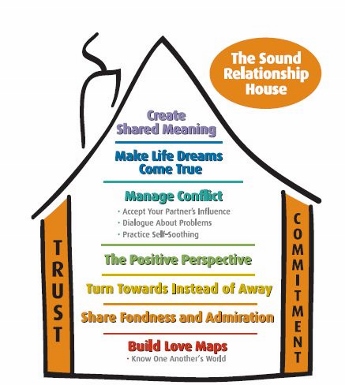
Perhaps if Jane's parents had known about this potential to predict the lasting power of their marriage they would have done something further ahead of time to potentially save themselves. Gottman has put together a list, or in this case a house, of 9 important characteristics that make a happy relationship. When I look at all of the characteristics described below I can see how my parent's relationship compared to Jane's parents. Although her parents put on a good act, they didn't have the deeper levels of connection that I know my parents have.
An interesting concept for me to think about is the fact that if my parents got divorced now they may be considered "grey divorcees." As the life expectancy of Americans continues to rise the more likely individuals in unhappy relationships are to terminate these relationships in hopes for a happier one. This means that if an individual divorces at 50 and they are expected to live well into their 80's they still have potentially 30 years to spend with another person in a happy relationship. Another factor that may contribute to the grey divorcee phenomenon is the rise in age of the baby boomer generation. As these individuals begin to age the grey divorce number increases because of the influx of the population. And although Jane's parents were much younger than mine, and aren't grey divorcees, they are still part of the ever present statistic that is growing more and more prevalent in the United States.

If I could go back and help Jane help her parents I would show her the "sound relationship house." Unfortunately, it is way past that time and Jane has moved on and is still a happy and healthy girl. Her parents were able to become friends and work together to help support and raise Jane together and she is one of the lucky ones. Looking back on this event makes me even more grateful that my parents have a happy and healthy relationship together and are able to work through their differences together. I hope to someday have a marriage modeled after them.

This is a creative blog. I like how you discuss the good marriage of your parent's and the not so good parents of Jane. You do an excellent job of revisiting these two lines of thought. The quality of your parent's marriage is apparent as they have weather the storm of having a daughter diagnoses Aspergers.
ReplyDeleteYou mention Jane's parent's seemed "happily married". Why? How common is this? Why is it not apparent?
I love how your post always have something personal and how you connect it to the topic we read each week. It not only gives a glimpse into your life, but also how there is data, and research that also shows this and makes everything connect smoothly.
ReplyDelete