Tuesday, December 9, 2014

So this is the end...

It's hard to imagine that this is the last blog that I will be writing for this class. It feels like just yesterday that I was learning how to create posts that were both interesting and informative while talking about the various topics of developmental psychology. But before I bring this little blog to a close I think its time to look back and see what exactly all of these topics have in common.

                   
                                              How cute is this little guy?
It makes the most sense on this "reflective" blog to start from the very beginning where it all began. My very first post looked at the ability of babies to think, which if you ask me was very interesting. As the oldest on both sides of the family I have grown up with my fair share of babies, and from personal experience I can say that babies know more than we give them credit for. However, research also indicates that babies can understand much more than we actually give them credit for. Angela Saini actually had researchers at the London Babylab preform tests (they were completely harmless, don't worry) on her 15 week old son. These tests actually showed that her son was able to understand things that the researchers put before him. Granted he was unable to tell them in words which picture he preferred, etc, but researchers were actually able to tell by how long he looked at various pictures. However, researchers such as Sylvain Sirois  believe that babies "know squat." Obviously, more research needs to be completed in order to have a clear picture of what is actually going on inside those little heads.
                        Displaying photo.JPG
                                     Brooke and Gabe - Meg Nowak's son
This theory that babies can think ties directly into the next topic of choice, language. Language shapes our everyday lives. No matter what we are doing, language ties in in some aspect. According to the Sapir-Whorf Hypothesis language actually shapes the way that we depict our world around us.This hypothesis explains why some tribes can only discern certain colors from each other. Because the tribe only has four words for colors they take longer to tell the differences between colors that may seem very different to us. The Sapir-Whorf Hypothesis ties directly into how babies think.

Based off of the Sapir-Whorf hypothesis it would make sense that babies that are raised in different parts of the world would actually think differently. A child that is raised in a tribe that only has four words for colors would grow up learning these four words and would therefore think differently than a child that grew up speaking English and knew many words for colors. However, if someone believed that babies don't think then the Sapir-Whorf Hypothesis would not be applicable.

The next comparison begins with attachment parenting, a controversial style of parenting that is becoming ever more popular in the United States. This style of parenting is based off of the closeness between parent and child, especially between mother and child. Dr. Bill Sears created this parenting style based off of extended breast feeding, co-sleeping and carrying your child in a sling across your
body. All of these characteristics are used to raise children that are confident and secure. However, there is some controversy to this practice of parenting, as it is so out of the ordinary. However, I will touch upon this later.

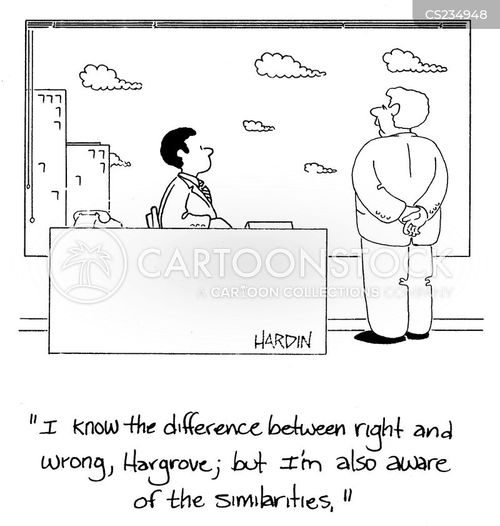
The theory of right and wrong is one that humans have pondered about since the beginning of time. However, a theorist by the name of Lawrence Kohlberg made strides in analyzing the theory of right and wrong and putting the various steps in words. Kohlberg developed his theory off of the famous developmental psychologist Piaget. Kohlberg believed that the theory of Right and Wrong developed as we developed. The theory of right and wrong actually applies to situations in our everyday lives that we may not even be aware of. Things such as making judgement over whether someone's parenting style is right or wrong for example. 
I know that if I were to see someone breastfeeding their four or five year old child in public I would immediately consider that morally wrong. I could not give justification for why that would be wrong, but I could tell you that it was wrong without a doubt in my mind. This is just one instance that shows how attachment parenting and Kohlberg's theory of right and wrong are intertwined. Another way to look at the interconnection of these two topics is to consider how my viewpoint of attachment parenting may be different if I had been raised by parents who believed in attachment parenting. At this point it is difficult to tell.

This final blog is quickly coming to a close with the last comparison of topics that I have. One of the topics that I was most passionate about was the theory of microexpressions. Microexpressions are the tiny changes in facial expressions that may give further insight into how an individual is feeling. From a first hand experience I have seen how important things like facial expressions are in our everyday lives. It is easy to tell if someone is angry, happy or sad but what exactly is the science behind learning how to read facial expressions? The theory of microexpressions was originally developed by Paul Ekman, a professor of Psychology. Ekman learned that anyone could learn how to read microexpressions and earn a leg up in the social world. But you may wonder how something like microexpressions can tie into the next topic, bullying.
            

If you are blessed enough to have made it through your whole life without being bullied consider yourself lucky, as well as a rare statistic. Bullying is a problem in today's society that reaches beyond the classroom or the school bus and is becoming a problem on things such as social media. Growing up in a culture where bullying is such a big problem, I have been through countless programs that are focused on making sure children know how harmful bullying can be, but the research is beginning to show that anti-bullying programs may not be working. Christopher Ferguson suggests that programs that focus on enhancing positive relationships and finding the reason behind the bullying may be much more successful.

Now you may be wondering how bullying and microexpressions relate, and it is a connection that someone may not make unless they have had direct experience with both factors. As I mention in my microexpressions blog, my sister Megan has a disorder called Aspergers syndrome. With this disorder my sister is unable to read facial expressions, and because of this was bullied throughout elementary and middle school. While all of Megan's classmates were learning the social structures of middle school, Megan was trying her best to try and understand what someones face looked like when they were mad at her, as compared to when they were upset. Meg missed out on many "inside" jokes because she was, and still is, unable to understand sarcasm. Although she has progressed over time, it is amazing to think how important something as innate as reading facial expressions can be when you no longer have it.


Looking back over this blog it amazes me that these topics are all so interrelated. Unless I had stepped back and taken the time to analyze each topic in depth I never would have realized how similar some of these topics are. So for now I say goodbye, it has been a pleasure to give you my view from up here.


Monday, November 3, 2014

Excuse me, do you have this in another color?

America is easily known as the "melting pot." Home of many ethnicities and mixed races that make up what we call "American." I never thought that being of mixed racial background would be considered a bad thing, however I was wrong. Growing up as a Caucasian in Maine I didn't have much experience with different races. I was perfectly aware that there were people that were different color than me in the world, but I didn't have any close friends that were a different race.
                      

This all changed when a student transferred to our high school from Haiti. He was the first black person I had ever really spoken to and I realized that although he looked different than I did he was still very similar. Having this first eye opening experience to someone that was different than I was meant a great deal to me. If this young man hadn't come to our school I could have very easily gotten to known my very first African American when I came to college.

This lack of knowledge about races that are different from our own can lead to many prejudices and a large divide between races. But where does this divide begin? Was I lucky enough to avoid this pitfall or is simply because of where I was raised?

Looking at today's statistics, race is beginning to not matter to many individuals across the country. According to the New York Times, 1 in 7 new marriages were interracial. As of 2013 87% of the population was okay with interracial marriages as compared to the 4% in 1959. This increase in acceptance for interracial couples can be attributed to the 1967 Loving v. Commonwealth of Virginia which removed the ban on interracial couples.
               Shutterstock
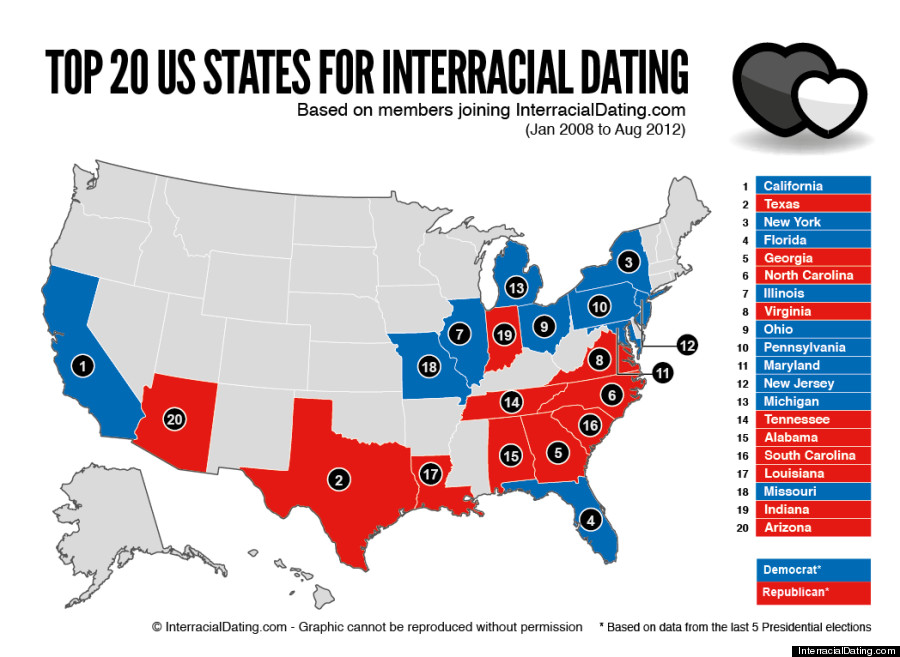
Interestingly, the top two states for interracial dating and couples are California and Texas. The majority of the other top twenty states are in the Eastern part of the country and in the south. It may also be interesting to mention that these two states are also considered the most conservative.
interracial dating by state
So is it fair to say that interracial issues in America are beginning to lessen? If we look at only dating and relationships it seems to be that we as a society are beginning to accept mixed race and interracial individuals more readily into our society. However, this doesn't take into account the general acceptance of these individuals into society.

The job market is difficult for anyone, but it may be that your race is beginning to play a role into whether or not you get a job offer. It has been shown that individuals that have ethnic sounding names, or attend schools that are predominately black have a less likely chance of being called for an interview with a company than those individuals that are overall generally white.

The newest thing for graduates has been "whitening their resume" or making it sound like they are more white so they have a higher likelihood of being called in for an interview. If an individual attends a college and gets an esteemed degree, it should not matter what their race is when it comes to getting the job.


Looking back on my own experience in high school I am very grateful that I was able to meet that particular individual and open my eyes to the different kinds of people that this world has to offer. I believe that because of this I am more able to see the world with open eyes and accept everyone for the person that they are, not the color of their skin.

Monday, October 27, 2014

May I Please Have That Bread?

As a child we are conditioned to learn what is right from what is wrong. I don't just mean learning the difference between the right and wrong answer to a math problem, I mean the difference between what is right and what is wrong morally. These are things that are pounded into our heads by teachers, parents and Sunday school teachers and surprisingly, they are also things that we may have trouble with from time to time as there are many gray areas.

                                 
Think back to the classic story of a man stealing a loaf of bread to feed his starving family. Do you think it was justified for him to steal? Do you think he should be punished from taking profits from another man that needs to feed his family? This is where determining right and wrong becomes difficult because everyone is going to have a slightly different moral answer.

When looking at making moral answers, Lawrence Kohlberg is believed to be the father of the modern idea of moral development. He based his ideas off of the famed Piaget and developed a series of 6 different stages of moral development. By looking at his theories and comparing the answers that individuals give to the questions stated above we can tell what stage of moral development each person is experiencing. The table below is a very good outline of each of the different stages.

Now, without rewriting each of the statements above and completely boring you to tears; I think it is best explained if you look at an example given by Jon Haidt. In his example a brother and sister want to experiment with their sexuality by having safe sex with each other. Haidt asked many test participants if they believed it was right or wrong for the brother and sister to have sexual intercourse together. Most people would immediately answer no, which may go back to the basic ideals of right and wrong that are instilled in us as small children. However, under which of the following stages explained above does the answer "no they shouldn't have sex because it's just wrong" fall into?

This is where the difficulty of determining moral answers ensues. Tamler Sommers looked deeper into the experiment conducted by Haidt and determined that in situations like this it is most natural for us as humans to pass judgement first and then try to justify our answer by saying it is morally correct. William Saletan also said in his article that Haidt like to bring topics to the surface that make us question our own moral judgement and are not simple "this is right, that is wrong" answers.

So how do we learn what is right and wrong? How do we determine if it alright for the man to steal the bread? Is it what our parents tell us? It is the way our brains simply develop? By taking into account the stages of moral development put forth by Kohlberg, as well as keeping our own judgments in mind, we will be better able to make difficult moral decisions.


Monday, October 6, 2014

So much for 'Death Do Us Part'

I have always been proud of my parent's relationship. They grew up together and were happily married by 23. They have been married for over 30 years now and make it look easy. When I picture myself married I dream of a relationship like my parent's, however with the current data this is looking like it is less and less common. This was demonstrated by a friend, we'll call her Jane, who had her parents split when we were freshman in high school. Her parents had been married for over 10 years and always seemed like the perfect couple on the surface. However, what the rest of the world didn't know was that they fought almost constantly and try as they might, they couldn't make their relationship work. Is this a common trend that is going to become more and more popular as time goes on? By the time I want to get married will that be a thing of the past?


However, does this mean that there is no hope for people like my parents to keep their marriage in tact for their whole lives? According to a study conducted by Dr. Gottman and two of his colleagues the likelihood of a marriage staying together can be predicted by a simple interview. This means that if my parents were curious enough to see if the experts said their marriage was going to last they could go and have this interview conducted. In said interview there are 7 key characteristics that are being observed: Expression of fondness/affection, Expression of negativity towards spouse, Expressiveness vs. withdrawal, We-ness vs. Seperateness (how much they identify as part of the couple), Level of traditionality regarding gender roles, How couple reported dealing with conflict: Volatility, Chaos, or Glorifying the Struggle, Marital Disappointment or Disillusionment. Amazingly, when conducted these surveys actually had a 94% accuracy rate. By looking at key attributes such as: A husband’s expression of fondness towards his wife, both the husband’s and the wife’s expression of we-ness, Expression of positivity or happiness in their marriage, especially on the part of the husband. Couples that are questioning their relationship may find it helpful to look into these particular characteristics.
                          
Perhaps if Jane's parents had known about this potential to predict the lasting power of their marriage they would have done something further ahead of time to potentially save themselves. Gottman has put together a list, or in this case a house, of 9 important characteristics that make a happy relationship. When I look at all of the characteristics described below I can see how my parent's relationship compared to Jane's parents. Although her parents put on a good act, they didn't have the deeper levels of connection that I know my parents have. 


An interesting concept for me to think about is the fact that if my parents got divorced now they may be considered "grey divorcees." As the life expectancy of Americans continues to rise the more likely individuals in unhappy relationships are to terminate these relationships in hopes for a happier one. This means that if an individual divorces at 50 and they are expected to live well into their 80's they still have potentially 30 years to spend with another person in a happy relationship. Another factor that may contribute to the grey divorcee phenomenon is the rise in age of the baby boomer generation. As these individuals begin to age the grey divorce number increases because of the influx of the population. And although Jane's parents were much younger than mine, and aren't grey divorcees, they are still part of the ever present statistic that is growing more and more prevalent in the United States.

                              
If I could go back and help Jane help her parents I would show her the "sound relationship house." Unfortunately, it is way past that time and Jane has moved on and is still a happy and healthy girl. Her parents were able to become friends and work together to help support and raise Jane together and she is one of the lucky ones. Looking back on this event makes me even more grateful that my parents have a happy and healthy relationship together and are able to work through their differences together. I hope to someday have a marriage modeled after them.


Wednesday, September 24, 2014

What I learned from Megan

When we first adopted my little sister Megan all seemed normal. She was a happy go lucky baby that smiled at everything. However as Megan aged we began to see differences in her. She had trouble connecting with kids her own age and struggled to find her place in the world. When Megan was 9 she tried to take her own life, it was at this point that my family decided we needed real answers. Megan was diagnosed with Aspergers Syndrome, a very high functioning form of Autism that is characterized by the inability to read facial expressions and moods. This led me to think of several questions. What does this mean for Megan's future? Is there a way to help her learn how to recognize facial expressions?
Megan and I at Epcot
According to Paul Ekman there is a way to help people learn how to recognize facial expressions. In this technique, or perhaps better referred to as an art, one is looking for evidence of microexpressions. Although it may sound complicated we each actually produce these expressions every day. A microexpression is defined as a normal expression that lasts on the face between 1/15 and 1/25 of a second. In comparison to normal expressions, also called macroexpressions, which last between 1/2 a second and 4 seconds. The key to teaching Megan how to better understand how to relate to others was teaching her how to learn to read macro and micro expressions. 

                    
Paul Ekman suggests that one of the best ways to learn how to read microexpressions is to learn what to look for. His trainings combine a variety of mediums that allow individuals to see subtle differences in individuals expressions and learn how to match those expressions to an emotion. Although my family never used this technique with Megan, we did make sure to explain to her why someone was acting the way they were and how to look for signs that they are feeling that way. As time progressed Megan began to become much better at recognizing emotions and connecting with others.

However, I wonder if we had used this technique with Megan, would she have progressed more quickly? She is almost 17 now, but if we had conditioned her to learn how to recognize others' emotions would she have learned these techniques at an earlier age? I also wonder what would have happened if Megan had been left in her adoptive home. As we now know that Aspergers Syndrome can lead to severe depression, and anxiety as life progresses. I wonder what would have happened to my little sister if she hadn't ended up in our family.

Today Megan is much like the happy go lucky baby that she once was. She loves German, chocolate and coffee and often complains about boys. She is essentially a normal 17 year old; although she knows that she has issues of her own to overcome. Knowing what we now know about microexpressions, we may be able to help people like Megan as well as people without Aspergers Syndrome connect to others much more easily. It is amazing what the brain is capable of. 

Saturday, September 20, 2014

When is it actually time to cut the cord?

I can remember when I was young I would crawl into my parents bed at night if I had a bad dream or if there was too much thunder and lightening. Being with my parents during those situations always made me feel safe and secure. However this concept of being close to your parents has become a bit extreme with Dr. Bill Sears theory of attachment parenting.
                 
In Dr. Sears extreme parenting theory there are several key principles that lead to an "ideal bond between mother and child." These theories include: co-sleeping - having your baby sleep in bed with you. Breast feeding - May not seem unusual except the children are breast fed up to the ages of 4 and 5. No diapers - This way the parent is "tuned in" to their infants needs. Baby wearing - This includes wearing your baby in a sling constantly. While many of these practices are used by parents everyday, the key difference is the level of moderation used. Parents that don't practice attachment parenting may only breastfeed up to a year old, or may only "wear" their child when they need some extra hands.
Brooke and Dad sharing some "closeness"

While many parents applaud Dr. Sears for this theory saying that it "endorses the idea of maternal closeness," many criticize Dr. Sears for being anti-feminist. This claim is easy to understand, as attachment parenting is extremely demanding. Realistically it is nearly impossible for a working mother to constantly have her baby attached to her, unless she works from home and even then how would she get anything done?

Many women have no other option than to place their child in daycare while they are at work. If the child is very young many mothers pump their own breast milk to be fed to the child throughout the day. However, with attachment parenting this is technically against the rules, as there is no closeness between mother and child. It would also be against the attachment rules to place the child in daycare to begin with, as the child isn't consistently with the mother.


This theory of constantly having the child attached to the mother fosters the idea of tuning into your babies needs. This includes nursing on demand, and knowing when your baby needs to use the bathroom. This may seem like something every parents learns as their child grows older, but with attachment parenting it is extremely important since the children don't wear diapers. Many parents even tune their children into a specific sound they make so that the child will use the bathroom almost on cue.

However, when does the closeness become a problem? In the article titled Sex in the Family Bed: Good Idea? the topic of co-sleeping is discussed. While having the whole family sleep in one bed may seem like a generally normal, albeit crowded, idea where does the parent's sexual life come into play? It seems many mothers  have opinions either way on this topic. Some couples move their canoodling to another room, while others do it right in the same bed as long as the children are asleep. This is one decision that the couple can only make together, no matter how many books they consult.

Overall, attachment parenting seems like it has qualities that are extremely beneficial to both mother and child. However, at what point does attachment parenting become a nuisance and debilitating to both mother and child? That's a decision only the individual can make.

Saturday, September 13, 2014

Say what?!

                                         
It has been said that people of Inuit tribes that live far, far up north have over 100 different words for snow. Does this mean that when they look at snow they see it different from us?

When you look at something like snow, or the color of grass or the color of a sunset do you ever think, "I wonder if someone on the opposite side of the world, or even the person standing next to me, is seeing the same thing?" Well that question may be getting closer to being answered.

It turns out that the way we speak may be a large influencing factor on the way we interpret the world. According to the Sapir-Whorf hypothesis, "...all observers are not led by the same physical evidence to the same picture of the universe, unless their linguistic backgrounds are similar." This makes sense to me. If I am told my whole life that the sky is blue, but someone else is told that the color I perceive as blue is actually red, or some other made up word, they may actually see something completely different than what I see.

However, I also see holes in this hypothesis. Since biologically we are all constructed the same, wouldn't it make sense that we fundamentally see the same things? I would imagine that something like trying to observe what another individual is seeing is next to impossible. However, in a study cited by Josephine Livingstone the Namibian Himba people only label their colors into 5 categories, and therefore it takes them much longer to distinguish between subtle differences in colors that you or I may be able to tell very quickly.

                                           
Out of all of the studies, the one conducted by Lera Boroditsky was the most fascinating. In this study people that spoke Kuuk Thaayorre don't use directions such as left and right, rather they use ordinal directions like north, south, east and west. When asked to place a set of chronological cards in order the individuals always placed the cards from east to west, no matter which direction they were facing. I found this absolutely amazing! Even at home, where I have lived my entire life, I sometimes find it difficult to determine where north is. This study contradicts the last one because it seems that the language you speak does in fact impact the way that you perceive the world. These people have an almost innate constant knowledge of their cardinal directions.

                                        
In another study conducted by Gary Lupyan college students were given a group of odd looking objects. The objects were divided into two groups, in each group the objects  were all different but had slight similarities that could be seen belonged to its respective group. The students were then asked to identify which group each object went into. However one set of students were told the names of the objects, Leebish and Grecious. At the end of the study it appeared that the students in the group given the names of the objects were much more likely to correctly guess which group the object belonged to. While I may have misunderstood the study I found it hard to believe that in this case language was shaping how the students thought. In contrast, I wonder if the students that were given a name were just more likely to see differences between the objects. But if that is so I suppose language really is shaping the way they were thinking... It all gets to be a bit confusing, but that seems to be the way of psychology sometimes.

We may never know if we see exactly what everyone else sees, however we are getting closer everyday to discovering how Inuits see snow when compared to the rest of the world.