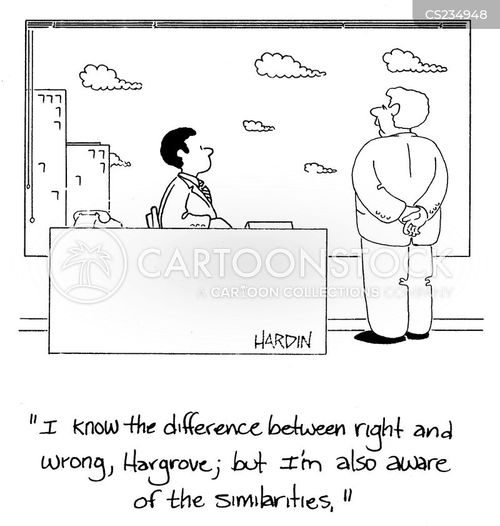
Think back to the classic story of a man stealing a loaf of bread to feed his starving family. Do you think it was justified for him to steal? Do you think he should be punished from taking profits from another man that needs to feed his family? This is where determining right and wrong becomes difficult because everyone is going to have a slightly different moral answer.
When looking at making moral answers, Lawrence Kohlberg is believed to be the father of the modern idea of moral development. He based his ideas off of the famed Piaget and developed a series of 6 different stages of moral development. By looking at his theories and comparing the answers that individuals give to the questions stated above we can tell what stage of moral development each person is experiencing. The table below is a very good outline of each of the different stages.

Now, without rewriting each of the statements above and completely boring you to tears; I think it is best explained if you look at an example given by Jon Haidt. In his example a brother and sister want to experiment with their sexuality by having safe sex with each other. Haidt asked many test participants if they believed it was right or wrong for the brother and sister to have sexual intercourse together. Most people would immediately answer no, which may go back to the basic ideals of right and wrong that are instilled in us as small children. However, under which of the following stages explained above does the answer "no they shouldn't have sex because it's just wrong" fall into?
This is where the difficulty of determining moral answers ensues. Tamler Sommers looked deeper into the experiment conducted by Haidt and determined that in situations like this it is most natural for us as humans to pass judgement first and then try to justify our answer by saying it is morally correct. William Saletan also said in his article that Haidt like to bring topics to the surface that make us question our own moral judgement and are not simple "this is right, that is wrong" answers.
So how do we learn what is right and wrong? How do we determine if it alright for the man to steal the bread? Is it what our parents tell us? It is the way our brains simply develop? By taking into account the stages of moral development put forth by Kohlberg, as well as keeping our own judgments in mind, we will be better able to make difficult moral decisions.


I like that you used the "bread" example. In addition, the Kholberg visual is very helpful to understanding his theory.
ReplyDeleteYou have a lot of good insight and depth in this post that makes it really easy to understand the two theories.
ReplyDelete